


[93] Theranostics, 10, 12, 5181-5194, (2020)
A Lab-on-a-Disc platform enables serial monitoring of Individual CTCs associated with tumor progression during EGFR-targeted therapy for patients with NSCLC
Minji Lim+, Juhee Park+, Alarice C. Lowe, Hyoung-oh Jeong, Semin Lee, Hee Chul Park, Kyusang Lee, Gwang Ha Kim, Mi-Hyun Kim*, and Yoon-Kyoung Cho*
The change ratio of the CTC counts was associated with tumor response, detected by CT scan, while the baseline CTC counts did not show association with progression-free survival or overall survival. We achieved a 100% concordance rate for the detection of EGFR mutation, including the emergence of T790M, between tumor tissue and CTCs. More importantly, our data revealed the importance of the analysis of the epithelial/mesenchymal signature of individual pretreatment CTCs to predict drug responsiveness in patients. The fluid-assisted separation technology disc platform enables serial monitoring of CTC counts, DNA mutations, as well as unbiased molecular characterization of individual CTCs associated with tumor progression during targeted therapy.

[92] BJU International, 126, 1, 191-201, (2020)
The combination of size‐based separation and selection‐free technology provides higher circulating tumor cells detection sensitivity than either method alone in patients with metastatic prostate cancer
Liang Dong, Zhongyuan Zhang, Kimberly Smith, Morgan Kuczler, Diane Reyes, Sarah R. Amend, Yoon‐Kyoung Cho, Wei Xue*, and Kenneth J. Pienta*
Here, we investigate the CTC capture abilities of two technologies that are not dependent on cell‐surface marker expression: a selection‐free platform, the AccuCyte®‐CyteFinder® system (Rarecyte) and a size‐based platform, the fluid‐assisted separation technology (FAST). The combination of the two systems to more completely assess CTCs was investigated.

[91] Lab Chip, 20, 5, 949-957, (2020)
Fully automated platelet isolation on a centrifugal microfluidic device for molecular diagnostics
Chi-Ju Kim+, Dong Yeob Ki+, Juhee Park, Vijaya Sunkara, Tae-Hyeong Kim, YooHong Min and Yoon-Kyoung Cho*
Herein, we describe a fully automated lab-on-a-disc-based method of platelet isolation from a small volume of blood (<1 mL). This method provides higher yields (>4 folds) and purity (>99%) and lower platelet activation than the conventional method. Moreover, it was also superior in the detection of platelet-related RNAs CD41, PF4, and P2Y12 due to lower contamination with white blood cells.

[90] Nano Letters, 20, 1, 441-448, (2020)
Near-Field Electrospinning for Three-Dimensional Stacked Nanoarchitectures with High Aspect Ratios
Yang-Seok Park+, Junyoung Kim+, Jung Min Oh, Seungyoung Park, Seungse Cho, Hyunhyub Ko, Yoon-Kyoung Cho*
Herein, we report on a direct-write 3D NFES technique to construct self-aligned, template-free, 3D stacked nanoarchitectures by simply adding salt to the polymer solution. Numerical simulations suggested that the electric field could be tuned to achieve self-aligned nanofibers by adjusting the conductivity of the polymer solution. We demonstrate the 3D printing of nanoskyscrapers with various designs, such as curved “nanowall arrays”, nano “jungle gyms,” and “nanobridges”. Further, we present an application of the 3D stacked nanofiber arrays by preparing transparent and flexible polydimethylsiloxane films embedded with Ag-sputtered nanowalls as 3D nanoelectrodes. The conductivity of the nanoelectrodes can be precisely tuned by adjusting the number of 3D printed layers, without sacrificing transmittance. The current NFES approach provides a simple, reliable route to build 3D stacked nanoarchitectures with high-aspect ratios for potential applications in smart materials, energy devices, and biomedical applications.

[89] Biosensors and Bioelectronics, 150, 111927, (2020)
Highly sensitive detection of hydrazine by a disposable, Poly(Tannic Acid)-Coated carbon electrode
Monsur Jiaul Haque+, Sumit Kumar+, Jonathan Sabaté del Río+, and Yoon-Kyoung Cho*
We propose an electrochemical sensor based on the enhanced electrocatalytic oxidation exhibited on a functionalized poly(tannic acid) coating to detect hydrazine. Tannic acid, a naturally abundant and low-cost polyphenol, was enzymatically polymerized with horseradish peroxidase and subsequently adsorbed on a disposable, screen-printed carbon electrode with a short incubation time (30 min). The fabrication method proved to be reproducible (4.2% relative standard deviation), with the sensors displaying high sensitivity (7 × 10⁻³ µA·mm-2·µM-1) and selectivity even in the presence of various common interfering agents. The low detection limit (100 nM) and robustness of the sensor demonstrated its suitability for environmental applications. It can be used to quantify hydrazine in tap and river water samples.

[88] Scientific Reports, 9, 18428,(2019)
AI-powered transmitted light microscopy for functional analysis of live cells
Dongyoung Kim, Yoohong Min, Jung Min Oh, and Yoon-Kyoung Cho*
Transmitted light microscopy can readily visualize the morphology of living cells. Here, we introduce artificial-intelligence-powered transmitted light microscopy (AIM) for subcellular structure identification and labeling-free functional analysis of live cells. AIM provides accurate images of subcellular organelles; allows identification of cellular and functional characteristics (cell type, viability, and maturation stage); and facilitates live cell tracking and multimodality analysis of immune cells in their native form without labeling.

[87] Advanced Functional Materials, 29, 30, 1902669, (2019)
Human Platelet Membrane Functionalized Microchips with Plasmonic Codes for Cancer Detection
Sumit Kumar, Jae‐A Han, Issac J. Michael, Dongyeob Ki , Vijaya Sunkara, Juhee Park , Shreedhar Gautam, Hong Koo Ha, Liangfang Zhang, Yoon-Kyoung Cho*
The possibility of functional roles played by platelets in close alliance with cancer cells has inspired the design of new biomimetic systems that exploit platelet–cancer cell interactions. Here, the role of platelets in cancer diagnostics is leveraged to design a microfluidic platform capable of detecting cancer‐derived extracellular vesicles (EVs) from ultrasmall volumes (1 µL) of human plasma samples. Further, the captured EVs are counted by direct optical coding of plasmonic nanoprobes modified with EV‐specific antibodies. Owing to the diverse function proteins associated with human platelets that can bind to the wide spectrum of cancer cell-derived extracellular vesicles, the resulting microdevice is capable for sensitive and accurate detection of cancer from ultra-small volumes of patient’s plasma samples

[86] Soft Matter, 15, 30, 6127-6133, (2019)
Effects of poly(ethylene glycol) on the wetting behavior and director configuration of lyotropic chromonic liquid crystals confined in cylinders
Hyesong Lee, Vijaya Sunkara, Yoon-Kyoung Cho and Joonwoo Jeong*
We investigate the effects of poly(ethylene glycol) (PEG) doping on nematic lyotropic chromonic liquid crystals (LCLCs) confined in a cylindrical cavity. We also confirm that the grafting of PEG to bare glass surfaces changes them from nemato-philic to nemato-phobic. Additionally, we observe that PEG-doped nematic SSY retains the double-twist director configuration as in the PEG-free case. However, the PEG-doped nematic SSY is accompanied by unprecedented domain-wall-like defects and heterogeneity in the director configuration. We propose multiple hypotheses on how PEG changes the director configuration, including the formation of meta-stable director configurations.

[85] Clinical and Translational Gastroenterology, 10, 7, e00055, (2019)
Clinical Potential of Circulating Tumor Cells in Colorectal Cancer: A Prospective Study
Dong Hoon Baek, Gwang Ha Kim, Geun Am Song, In Sub Han, Eun Young Park, Hyun Sung Kim, Hong Jae Jo, Sang Hwa Ko, Do Youn Park, and Yoon-Kyoung Cho
Circulating tumor cells (CTCs) in the blood have been used as diagnostic markers in patients with colorectal cancer (CRC). In this study, we evaluated a CTC detection system based on cell size to assess CTCs and their potential as early diagnostic and prognostic biomarkers for CRC

[84] Lab Chip, 19, 9, 1665-1675, (2019)
Immature dendritic cells navigate microscopic mazes to find tumor cells
Eujin Um,ab Jung Min Oh,a Juhee Park,a Taegeun Song,c Tae-Eon Kim,a Yongjun Choi,ab Changsik Shin,a Diana Kolygina,a Jae-Hyung Jeon,c Bartosz A. Grzybowski*ab and Yoon-Kyoung Cho*ab
The challenge lies in understanding the recruitment of immune cells to the tumor site with the contradictory outcomes: tumor reduction or progression. The movement of immature dendritic cells, which navigate and sample the environment before activating the immune response, is random by nature, and recognizing the effective chemotactic cues towards cancer among a myriad of cytokines present in the surroundings is finding a needle in a haystack. In this paper, we find imposing physical constraints in the cell migration tracks in the geometry and dimensions modulates the directional persistence of dendritic cells. A delicate balance between chemotactic cues and the physical confinements reveals subtle chemotactic differences of dendritic cells in cancer vs. normal cell surroundings even inside a complex maze.
[83] ACS Nano, 13, 3, 3714-3722, (2019)
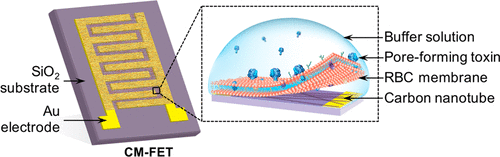
Biomembrane-modified field effect transistors for sensitive and quantitative detection of biological toxins and pathogens
Hua Gong, Fang Chen, Zhenlong Huang, Yue Gu, Qiangzhe Zhang, Yijie Chen, Yue Zhang, Jia Zhuang, Yoon-Kyoung Cho, Ronnie H. Fang, Weiwei Gao, Sheng Xu*, and Liangfang Zhang*
Herein, we report a cell-membrane-modified field effect transistor (FET) as a function-based nanosensor for the detection and quantitative measurement of numerous toxins and biological samples. By coating carbon nanotube FETs with natural red blood cell membranes, the resulting biomimetic nanosensor can selectively interact with and absorb broad-spectrum hemolytic toxins regardless of their molecular structures. Toxin–biomembrane interactions alter the local charge distribution at the FET surface in an ultrasensitive and concentration-dependent manner, resulting in a detection limit down to the femtomolar (fM) range.

[82] Theranostics, 9, 7, 1851-1863, (2019)
Fully automated, label-free isolation of extracellular vesicles from whole blood for cancer diagnosis and monitoring
Vijaya Sunkara+, Chi-Ju Kim+, Juhee Park, Hyun-Kyung Woo, Dongyoung Kim, Hong Koo Ha, Mi-Hyun Kim, Youlim Son, Jae-Ryong Kim, Yoon-Kyoung Cho*
Lab-on-a-disc equipped with sequential nanofiltration is presented for fully automated, rapid, label-free EV enrichment with high yield and purity starting from whole blood or plasma for cancer diagnosis and monitoring.

[81] Biomaterials science, 7, 4, 1393-1398, (2019)
Biologically-active unilamellar vesicles from red blood cells
Hyun-Sook Jang, Yoon-Kyoung Cho, and Steve Granick*
We demonstrate a method to prepare giant unilamellar vesicles (GUVs) with biologically-active protein activity, by mixing erythrocyte (red blood cell) membrane extract with phospholipids and growing their mixture in a porous hydrogel matrix. This presents a pathway to retain protein biological activity without prior isolation and purification of the protein.

[80] Biosensors and Bioelectronics, 127, 15, 50-56, (2019)
Universal Method for Direct Bioconjugation of Electrode Surfaces by Fast Enzymatic Polymerization
Sumit Kumar, Al-Monsur Jiaul Haque, Jonathan Sabaté del Río, Shreedhar Gautam, Yoon-Kyoung Cho*
This HRP-catalyzed polymerization of TA and p(TA)-mediated surface modification method can provide a simple and new framework to construct multifunctional platforms for covalent attachment of biomolecules and development of sensitive electrochemical sensing devices

[79] ACS Catalysis, 9, 2, 977–990, (2019)
Plasmonically Coupled Nanoreactors for NIR-Light-Mediated Remote Stimulation of Catalysis in Living Cells
Amit Kumar, Sumit Kumar, Nitee Kumari, Seon Hee Lee, Jay Han, Issac Michael, Yoon-Kyoung Cho*, In Su Lee*
Artificial nanoreactors that can facilitate catalysis in living systems on-demand with the aid of remotely operable and biocompatible energy-source, are needed to leverage the chemical diversity and expediency of advanced chemical synthesis in biology and medicine. Here, we designed and synthesized plasmonically-integrated nanoreactors (PINERs) with highly tunable structure and NIR-light-induced synergistic function for efficiently promoting unnatural catalytic reactions inside living cells.

[78] Lab Chip, 19, 1, 87-97, (2019)
Urine-based liquid biopsy: non-invasive and sensitive AR-V7 detection in urinary EVs from patients with prostate cancer
Hyun-Kyung Woo+, Juhee Park+, Ja Yoon Ku, Chan Ho Lee, Vijaya Sunkara, Hong Koo Ha* and Yoon-Kyoung Cho*
Androgen receptor splice variant 7 (AR-V7) is associated with castration-resistant prostate cancer (CRPC) and resistance to anti-androgen therapy. Herein, we suggest a practical and non-invasive liquid biopsy method for analysis of AR-V7 in the RNA of urine-derived extracellular vesicles (EVs) without the need for blood withdrawal. Higher AR-V7 and lower AR-FL expression were detected in urine-derived EVs from 14 patients with CRPC than in those from 22 patients with hormone-sensitive prostate cancer. This study is the first to report that RNA of urine-derived EVs is a reliable source for AR-V7 expression analysis. The proposed method for quantifying AR-V7 in urinary EVs prepared by a lab-on-a-disc is, therefore, a simple and promising approach to liquid biopsy with great potential for therapeutic impact on prostate cancer.

[77] Journal of Gastroenterology and Hepatology, 34, 3, 552-560, (2018)
Circulating tumor cells detected using fluid‐assisted separation technique in esophageal squamous cell carcinoma
Mun Ki Choi, Gwang Ha Kim*, Hoseok I, Su Jin Park, Moon Won Lee, Bong Eun Lee, Do Youn Park, Yoon‐Kyoung Cho
Esophageal squamous cell carcinoma (ESCC) is one of the aggressive gastrointestinal tract cancers. Detection of circulating tumor cells (CTCs) in peripheral blood from patients with various malignancies has been reported to have diagnostic, prognostic, and therapeutic implications. We aimed to evaluate CTCs in patients with ESCC and assess the clinical significance of CTCs in the early diagnosis of ESCC.

[76] PNAS, 115, 46, E10812-E10821, (2018)
Catalytic enzymes are active matter
Ah-Young Jee, Yoon-Kyoung Cho, Steve Granick, and Tsvi Tlusty
Catalysis and mobility of reactants in fluid are normally thought to be decoupled. Violating this classical paradigm, this paper presents the catalyst laws of motion. Comparing experimental data to the theory presented here, we conclude that part of the free energy released by chemical reaction is channeled into driving catalysts to execute wormlike trajectories by piconewton forces performing work of a few kBT against fluid viscosity, where the rotational diffusion rate dictates the trajectory persistence length. This active motion agitates the fluid medium and produces antichemotaxis, the migration of catalyst down the gradient of the reactant concentration. Alternative explanations of enhanced catalyst mobility are examined critically.
[75] J. Am. Chem. Soc., 140, 45,1 5176–15180, (2018)
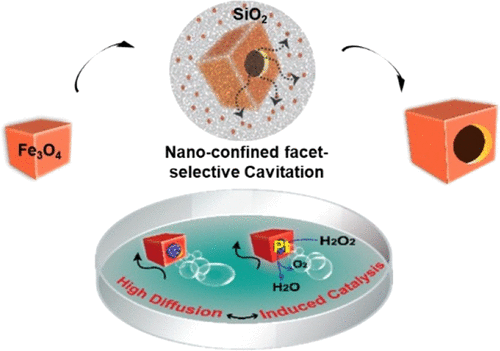
Monofacet-Selective Cavitation within Solid-State Silica-Nanoconfinement toward Janus Iron Oxide Nanocube
Sunyi Lee, Nitee Kumari, Ki-Wan Jeon, Amit Kumar, Sumit Kumar, Jung Hun Koo, Jihwan Lee, Yoon-Kyoung Cho, and In Su Lee*
The Janus-type concave iron oxide nanocube was further functionalized with the controllable density of catalytic Pt-nanocrystals exclusively on concave sites and utilized as a highly diffusive catalytic Janus nano-swimmer for the efficient degradation of pollutant-dyes in water. The strategy is based on a novel heat-induced nanospace-confined domino-type migration of Fe2+ions from the SiO2–Fe3O4 interface toward the surrounding silica shell and concomitant self-limiting nanoscale phase-transition to the Fe-silicate form.

[74] ACS Appl. Mater. Interfaces, 10, 40, 33839-33846, (2018)
Surface Engineered Paper Hanging Drop Chip for 3D Spheroid Culture and Analysis.
Issac Michael, Sumit Kumar, Jung Min Oh, Dongyoung Kim, Junyoung Kim, Yoon-Kyoung Cho*
We demonstrated hanging drop three-dimensional (3D) spheroid culture and in-site analysis, including drug testing, time-dependent detection of secreted protein, and fluorescence staining without disturbing the spheroids. This single hanging drop system can also be extended to a networked hanging drop chip to mimic in vivo microphysiology by combining with wax-patterned microfluidic channels, where well-to-well interaction can be accurately controlled in a passive manner. Our method demonstrates a future possibility for paper as a low cost, high-throughput 3D spheroid-based “body-on-a-chip” platform material.
- 8Page 4